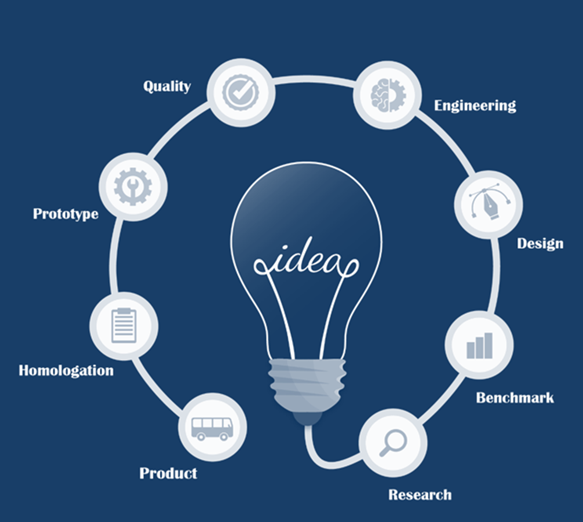
Successful PLM project implementation requires the establishment or thorough review of the essential infrastructure encompassing processes, systems, and governance, all aligned with contemporary product development standards and best practices. As a trusted partner, we accompany our clients throughout their journey of transformation and operational excellence—helping them realize fully integrated Product Lifecycle Management processes while maximizing the benefits of digital continuity and seamless system integration.
PLM Strategy & Implementation:
Develop and implement the overall PLM strategy, including defining processes, selecting and configuring PLM systems, and integrating them with other business systems.
Stakeholder Management:
Collaborate with various teams (engineering, manufacturing, IT, etc.) to ensure alignment and successful PLM adoption across the organization.
Team Management:
Lead and manage a team of PLM professionals, providing guidance, mentoring, and performance management.
Training & Support:
Develop and deliver training materials and support documentation for users of the PLM system.
Process Optimization:
Identify and implement process improvements to streamline product development, manufacturing, and service processes using PLM capabilities.
System Monitoring & Maintenance:
Monitor the performance of the PLM system, identify issues, and recommend improvements to ensure optimal functionality.
Technical Authority:
Act as the primary technical expert for the PLM system, providing guidance on best practices for configuration, customization, and deployment.
Change Management:
Manage the change management process related to PLM implementations, ensuring smooth user adoption and minimizing disruption.
PLMlead:
“Pioneering Digitalization Solutions”
In close alignment with our clients’ strategic business objectives, we execute projects using the latest advancements in product research, development methodologies, and digital engineering practices. We provide comprehensive support across all project phases and consider it our responsibility to build our clients’ internal capabilities through targeted knowledge transfer and training, fostering long-term industry leadership. Our approach leverages Systems Engineering principles and Model-Based Design (MBD) within a robust PLM platform. Within our core areas of expertise, we have successfully delivered a wide spectrum of projects across the following categories.
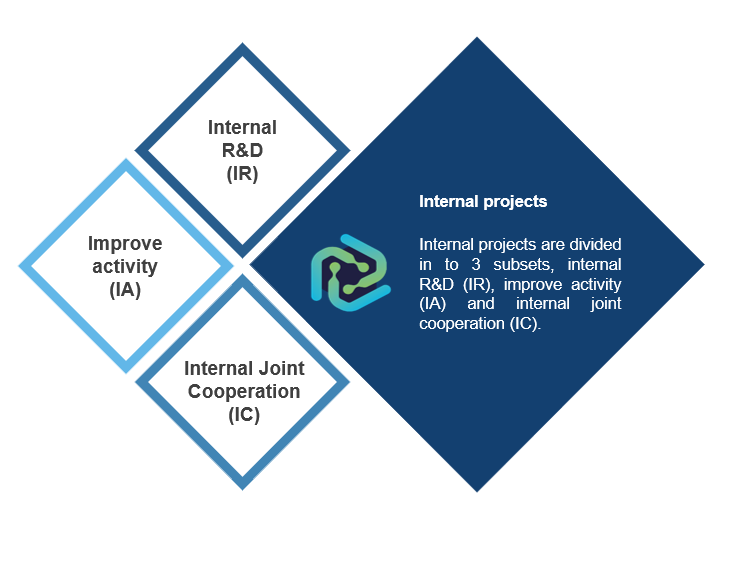
Internal Projects
Internal R&D (IR):
These projects are initiated by individuals or departments to address technical challenges, develop engineering solutions, or drive innovation within the product and service portfolio. They are formally implemented following validation and approval by the Systems Engineering Office and the Strategic Project Management Office.
Improvement Activities (IA):
These internal projects focus on achieving compliance with standards and certifications, implementing corrective and preventive actions (CAPA), and enhancing processes and organizational structures to generate sustainable structural value. Implementation occurs after formal approval by the Strategic Project Management Office.
Internal Joint Cooperation (IC):
These collaborations are undertaken at PLMLead’s request with external companies or research centers. They support research, idea generation, solution development, or execution of internal R&D projects, improvement activities, and market development initiatives. All such partnerships are implemented only after approval by the Strategic Project Management Office.
External Projects
Research (RS):
Projects requested by clients to validate or refute specific issues, designs, ideas, or solutions within PLMLead’s product portfolio. These may take the form of technical-engineering studies, economic assessments, or a combination of both. They are defined by the Strategic Project Management Office and executed under the leadership of the Systems Engineering Office, in coordination with the technical department and sales office. (Includes feasibility studies and economic justification from technical, financial, or combined perspectives.)
New Product design (NP):
All new product design projects requested by clients to complete part or all of the product development and engineering lifecycle. These projects are defined and managed in close consultation with the Systems Engineering Office and the Strategic Project Management Office.
External Joint Cooperation (EC):
Collaborative projects initiated at the request of international companies for research, ideation, solution development, or joint execution. These encompass new design, derivative design, improvement design, reverse engineering, research, and commercial development initiatives. All such partnerships are implemented only after approval by the Strategic Project Management Office.
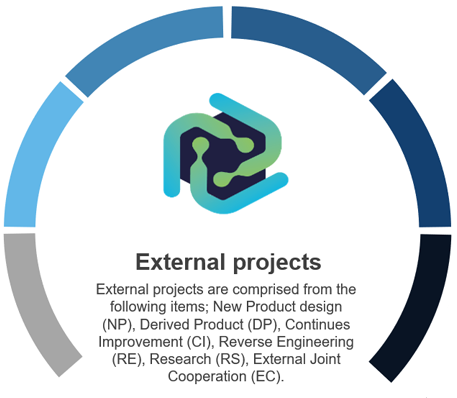
Derivative Product (DP):
Derivative product design projects (where the foundational new design process has been previously established as an NP project within PLMLead) requested by clients. These involve partial or complete execution of the product development and engineering process to enhance or modify product variants, carried out with the guidance of the Systems Engineering Office and the Strategic Project Management Office.
Reverse Engineering (RE):
Client-requested projects aimed at extracting solutions, knowledge, and technical insights from existing products or systems. This involves identifying components, their interrelationships, and creating high-level system profiles to understand underlying technologies and principles. These projects cover part or all of the product development and engineering process for detailed structural and performance analysis, managed by the Systems Engineering Office and the Strategic Project Management Office.
Continues Improvement (CI):
Improvement design projects (where the original or derivative design process has been previously defined as an NP or DP project within PLMLead) requested by clients. These focus on partial design enhancements while maintaining the same brand identity and product category. They are executed with the approval and oversight of the Systems Engineering Office and the Strategic Project Management Office.